






Why this matters
AI crawler analytics matters because AI crawler access is not only a setting. Teams need to know whether important pages are actually being requested over time.
AI crawler analytics helps teams review how AI crawlers and AI bots interact with important website pages.




Ready to turn keyword ideas into an AI search workflow?
Open The AI Workspace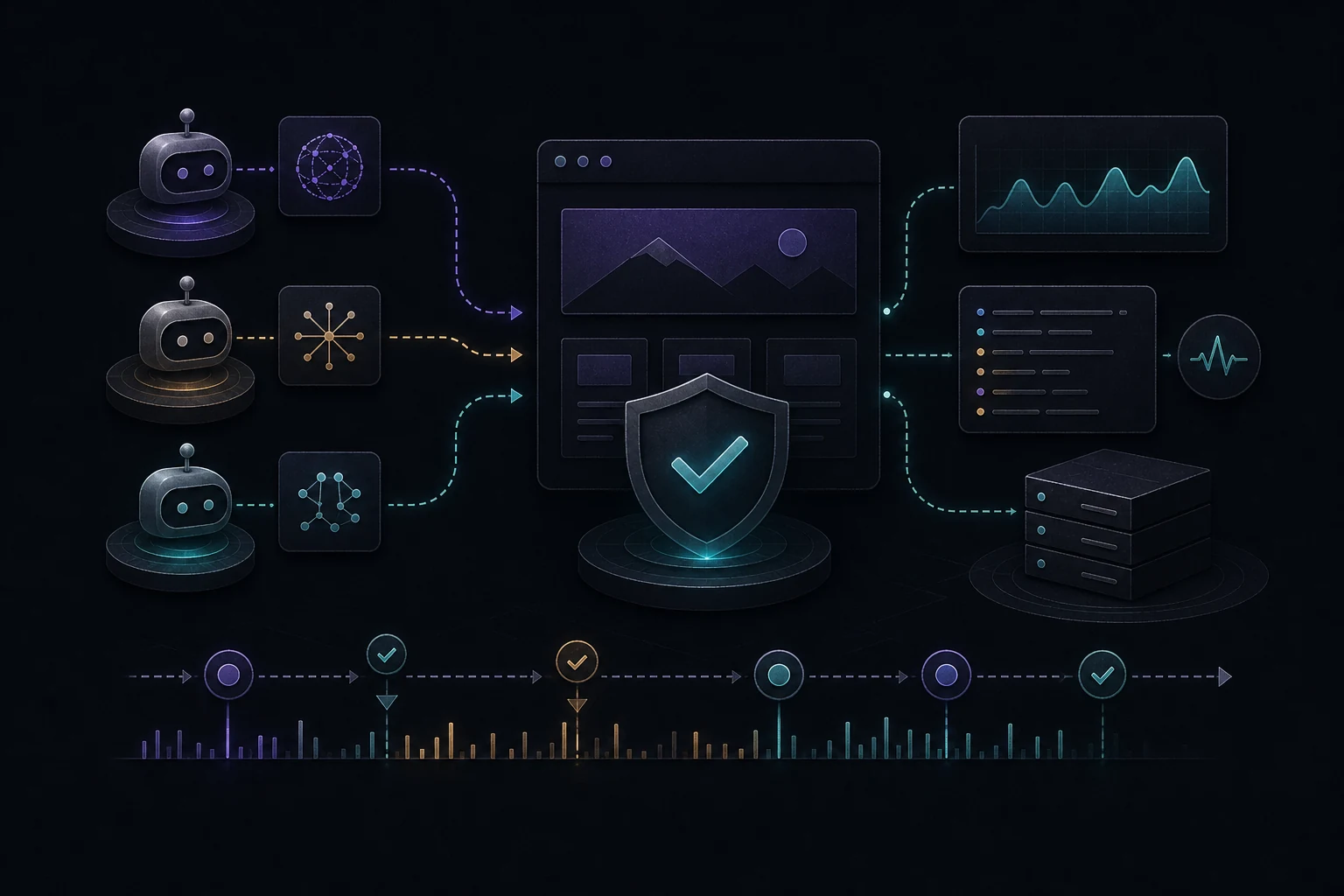
Use an AI crawler monitor to summarize verified server-side requests by provider, crawler purpose, canonical URL, status code, first seen, last seen, and time trend. Preserve raw evidence and uncertainty, separate User-Agent matches from verified identities, and never interpret a crawler request as proof of indexing, model use, citation, referral traffic, or conversion.
This landing page belongs to the GPTBot/AI Bot Tracking cluster. It targets AI crawler analytics, AI crawler SEO, AI bots monitoring, track AI indexers, LLM crawler tool, and AI search analytics, while supporting the central AI bot tracking tool page.
AI crawler analytics matters because AI crawler access is not only a setting. Teams need to know whether important pages are actually being requested over time.
Start with important pages, review AI crawler analytics, compare crawler patterns, and connect findings to the AI bot tracking tool workflow.
Audit, AI visibility, research, content optimization, and reporting-organized around the website you are improving.
 TruboRankAI
Third-party names and logos are trademarks of their owners and are shown for comparison. Other-tool prices are illustrative monthly benchmarks; exact plans and costs may vary.
This landing page belongs to the GPTBot/AI Bot Tracking cluster. It targets AI crawler analytics, AI crawler SEO, AI bots monitoring, track AI indexers, LLM crawler tool, and AI search analytics, while supporting the central AI bot tracking tool page.
Choose the evidence source before drawing a chart. Origin logs may omit responses served from cache, while CDN, edge, WAF, or supported tracker records may see a broader request stream. Document the production hosts, collection layer, timezone, retention, sampling, exclusions, and proxy-address handling so one period can be compared with another.
Maintain a crawler registry from official provider documentation. Store the exact User-Agent, provider, stated purpose, verification method, source link, and last review date. Keep search, training, and user-triggered agents separate. Report a string-only match as unverified when a source address or trusted verified-bot signal cannot be confirmed.
Normalize every event before aggregation. Resolve host variants and redirected URLs to a canonical path, keep the original status and final outcome, and distinguish content pages from assets, health checks, and internal tests. Show request count, requested-page count, first seen, last seen, status distribution, and verification state rather than presenting a single opaque score.
Compare activity with the site inventory. Use the sitemap and priority public-page list to identify requested, never-observed, redirected, blocked, or failing resources. An unobserved page is not automatically blocked: it may be new, weakly linked, cached at another layer, outside retention, or not selected during the period. Preserve those alternatives in the conclusion.
Use trends for diagnosis. Annotate robots changes, WAF changes, deployments, migrations, major publishing dates, and outages. If activity changes, inspect the affected provider, purpose, path, and response evidence before attributing the movement to content quality or platform preference.
Keep downstream outcomes in separate panels. A crawler request proves a resource was requested at a time. Search indexing, AI answer inclusion, citations, human referrals, and conversions need Search Console, provider reporting or controlled observations, analytics, and business data. They can be compared by date without being collapsed into the same metric.
Turn one verified finding into action. Fix an accidental block, redirect, server failure, missing discovery path, or weak source page; deploy; then repeat the exact collection query. Preserve before and after evidence and avoid broad policy or content changes that cannot be attributed or safely rolled back.
Useful metrics include verified visits, requested URLs, status codes, crawl frequency, blocked requests, and changes after publishing or technical updates.
This page should support the central AI bot tracking tool page.
Reviewed on 2026-08-26 against official OpenAI, Anthropic, Perplexity, and Cloudflare crawler documentation. Published access policy, verified request traffic, citations, referrals, and conversions are reported as separate evidence layers.