
ChatGPT, Perplexity, Gemini, and Claude combined.
Live Founder Case Study
27,067 AI Referral Visits and 109,509 Tracked Crawler Events
Plinkod is a browser games platform in a crowded discovery market. Its evidence snapshot records 27,067 visits from AI answer platforms, including 6,444 from ChatGPT, alongside a 109,509-event crawler dataset.
Real Referral DataConfidence-Labeled Bot Data
Referral visits document traffic from AI platforms. Crawler events document page access and successful responses. Saved answer-engine screenshots document observed appearances and recommendations. Keeping these layers separate makes the result easier to verify and trust.
Observed outcome
AI discovery moved from a vague idea to a measurable channel.
ChatGPT generated 6,444 visits and 1,046 pageviews—23.8% of all measured AI-platform visits. It also sent 21.5 times the visits attributed to Bing in the same snapshot.
Compared with 300 visits from Bing.
Observed pageviews attributed to AI platforms.
Distinct resource paths across the tracking period.
| Signal | Observed value | What it means |
|---|---|---|
| AI-platform total | 27,067 visits / 1,686 pageviews | Measured referral traffic from four AI answer platforms. |
| ChatGPT | 6,444 visits / 1,046 pageviews | Ranked seventh among 241 recorded referral sources and supplied 23.8% of AI-platform visits. |
| ChatGPT versus Bing | 21.5× more visits | 6,444 ChatGPT visits compared with 300 visits attributed to Bing. |
| AI referral coverage | 4 platforms | ChatGPT, Perplexity, Gemini, and Claude all produced measurable visits. |
Context
The starting point
Plinkod operates in a competitive browser games niche where similar sites compete for the same discovery queries, playable game searches, and AI recommendation opportunities.
Before the workflow was documented, it was difficult to answer practical questions such as:
- Are AI crawlers reaching the site?
- Which pages are being discovered?
- Are search signals moving alongside technical and content improvements?
- Is the site appearing in any relevant AI answers?
Workflow
The workflow used
Review technical and AI-readability gaps
Check crawlability, page structure, summaries, internal links, and discoverability signals.
Improve content clarity
Make key pages easier to understand through clearer titles, page summaries, FAQ-style information, and more specific user intent.
Monitor crawler activity
Track AI and search crawler visits to see whether the site and its pages are being discovered.
Connect search context
Use Google Search Console data to understand impressions, clicks, position, and pages with potential.
Document observed AI visibility
Save screenshots when Plinkod appears as a source, option, reference, or recommendation in relevant AI answer engines.
Continue improving
Use the collected signals to decide which pages, content types, and technical areas should be improved next.
Measured signals
What became measurable
Crawler visits could be monitored instead of assumed.
It became easier to see which pages search and AI systems were reaching.
Search Console data added context around impressions, clicks, and page opportunity.
Screenshots created a documented record of where Plinkod was observed in relevant AI answers.
Search Console context
Search data gives context for visibility work.
This screenshot shows Plinkod connected to Google Search Console inside TruboRankAI. It supports the study by providing search context, but it is not used as a standalone causation claim.
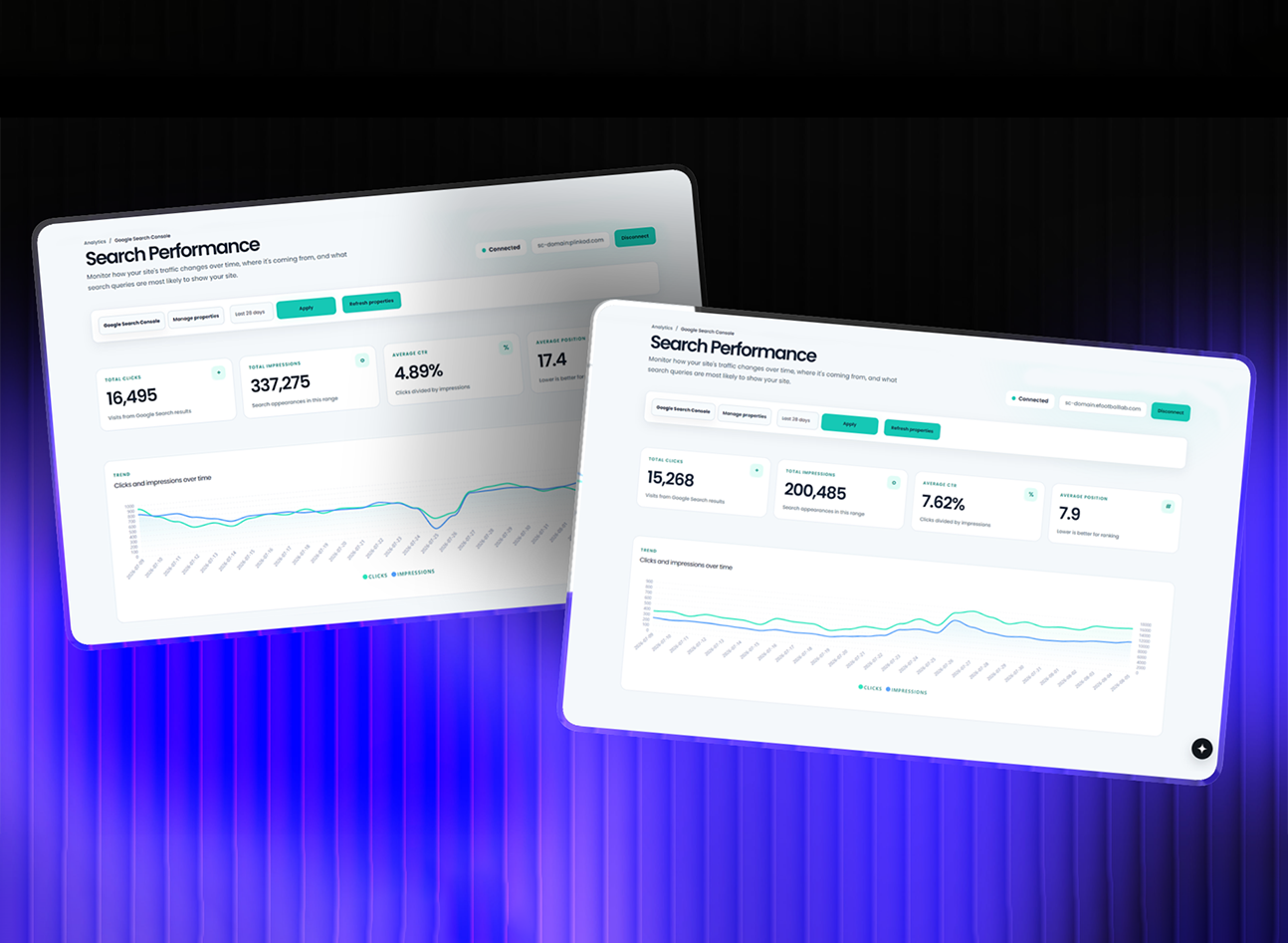 Search Console linked
 ChatGPT
 Claude
 Bot activity
 Crawler breakdown
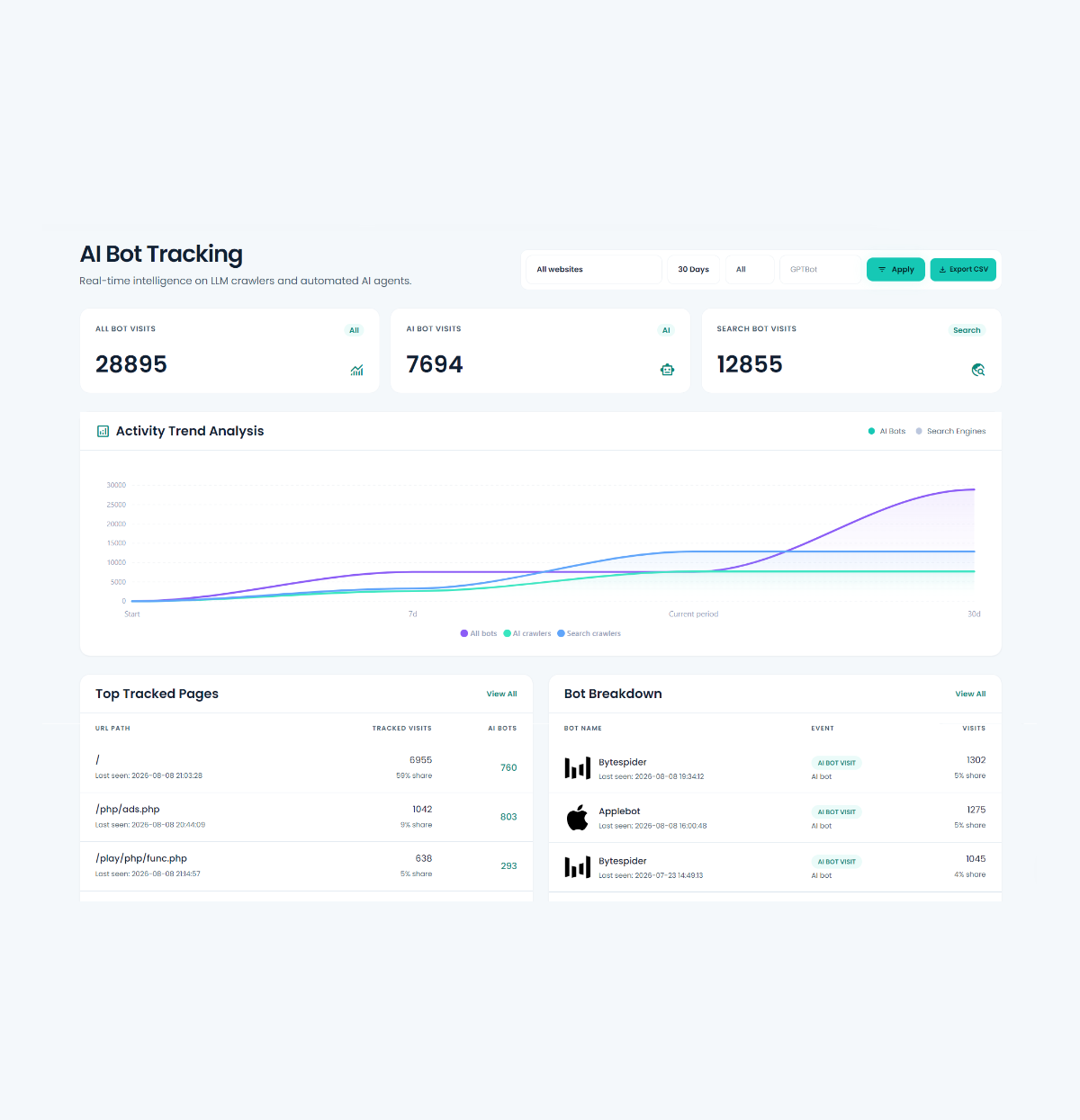
AI bot tracking context
109,509 crawler events became reviewable.
The published Bot Tracking snapshot covers 30 April 2026 to 1 October 2026 and contains 27,067 events classified as AI crawlers, 50,545 classified as search crawlers, and 2,649 distinct paths. Successful HTTP 200 responses account for 99.2% of the recorded crawler events.
All Plinkod rows in the exported tracking period.
Classification by recorded crawler name and type.
Search bot events in the same export.
108,624 successful responses recorded.
Observed crawlers
BingbotGooglebotApplebotBytespiderSemrushBotChatGPT-UserAhrefsBotDeepseekBotYandexBotCCBotClaudeBotPerplexityBotxAI-Grok
| Signal | Observed value | What it means |
|---|---|---|
| Bytespider | 8,140 events | Largest AI-classified crawler group in the historical export. |
| Applebot | 5,991 events | Second-largest AI-classified crawler group. |
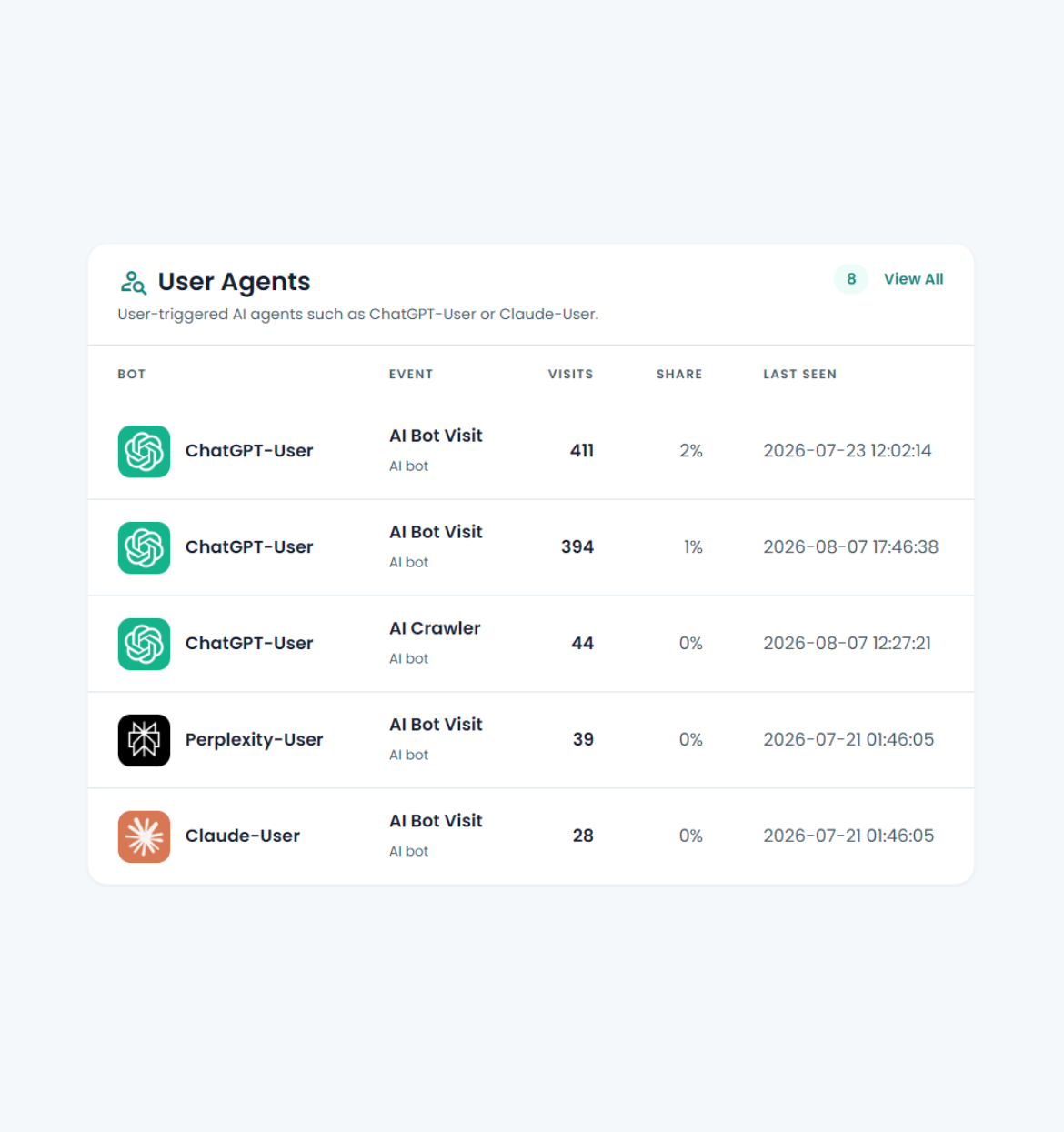
| ChatGPT-User | 4,032 events | User-triggered OpenAI fetch activity classified from the recorded agent name. |
| ClaudeBot | 2,225 events | Anthropic crawler activity classified from the recorded agent name. |
| Evidence labeling | Separated by confidence tier | Historical classifications and later server-reported events remain distinguished in the underlying evidence. |
AI answer evidence
Observed appearances in selected AI answer engines.
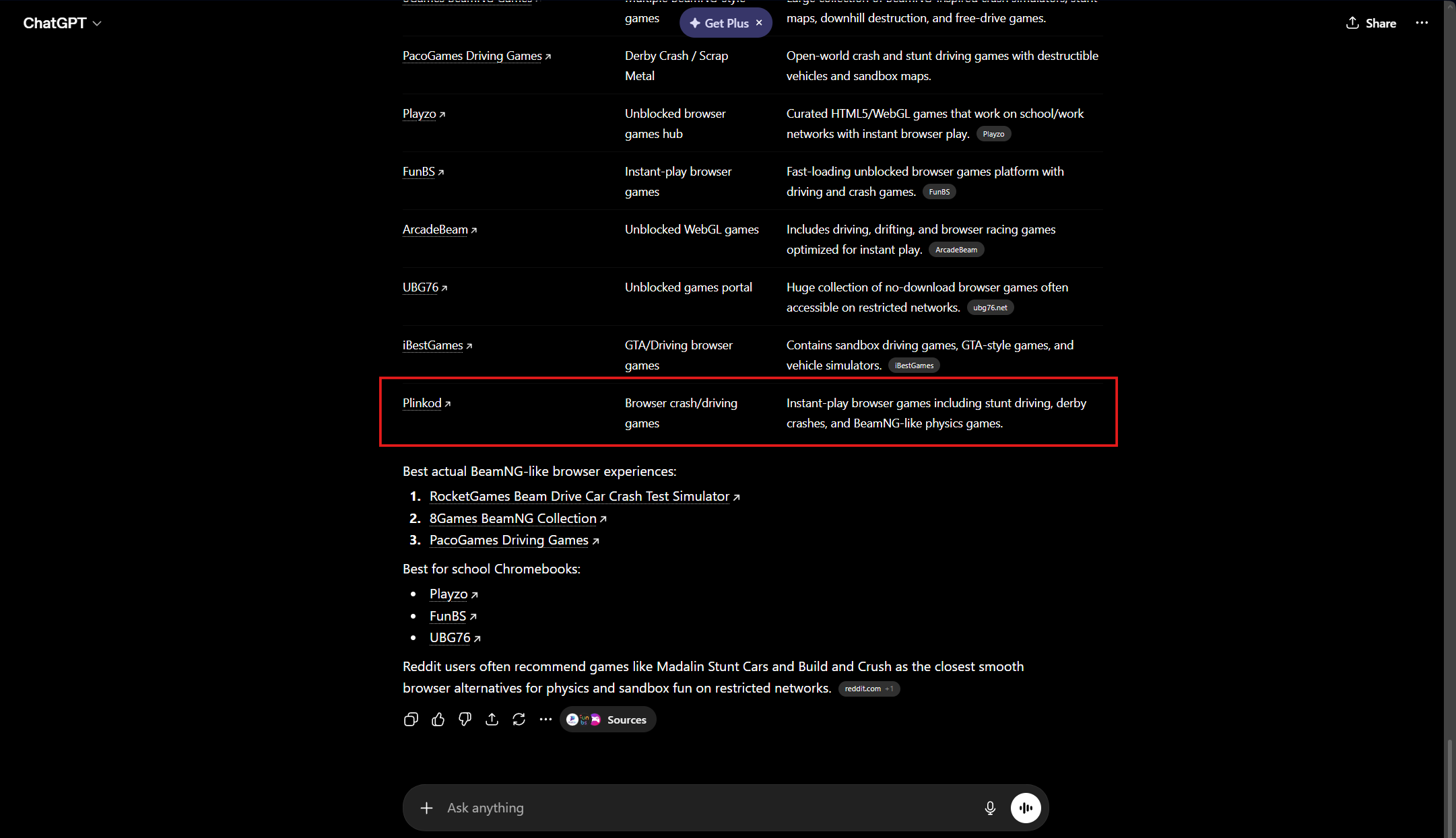
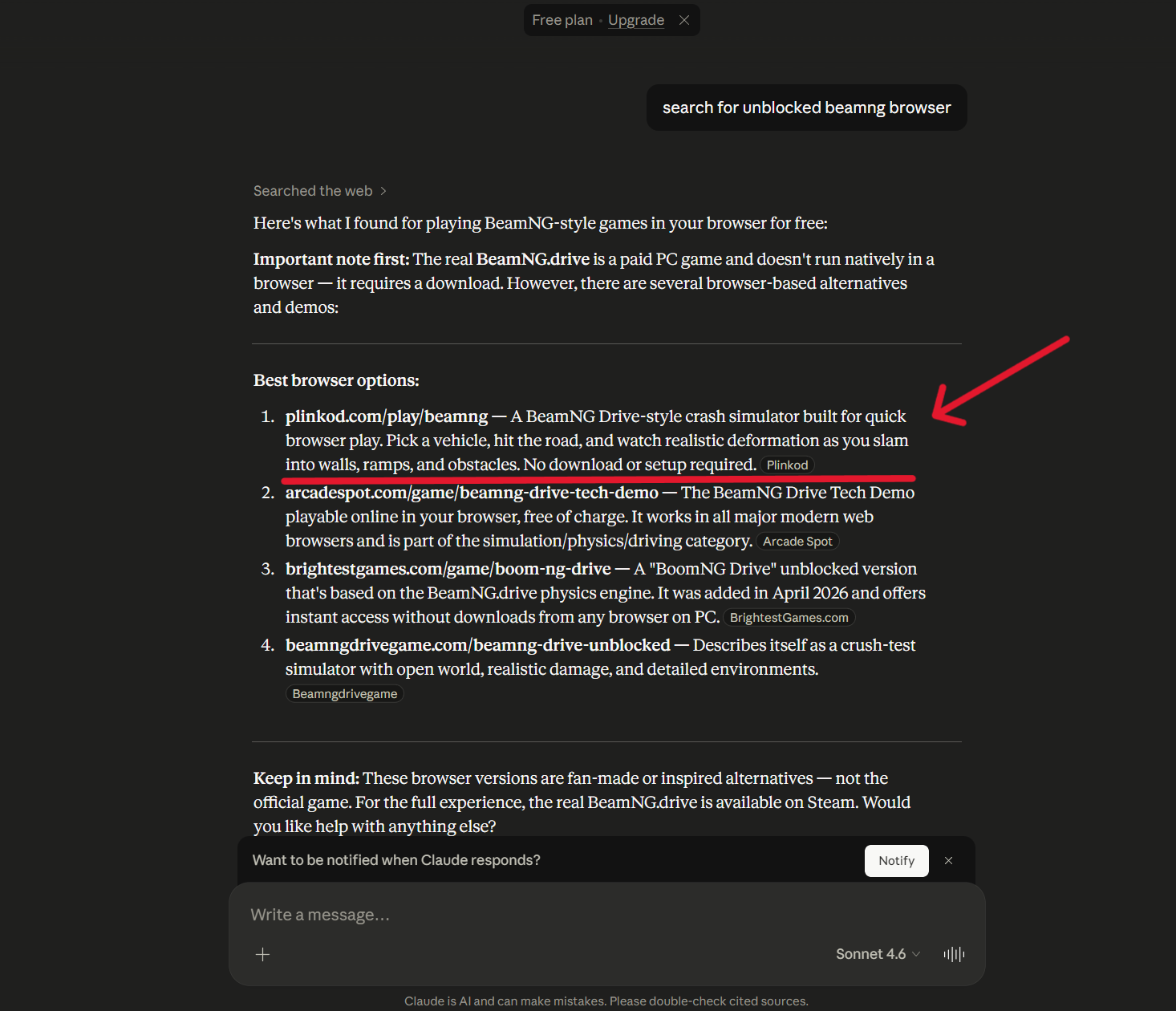
The screenshots below show Plinkod being observed, referenced, listed, or recommended across selected AI answer engines for browser game and game alternative queries.
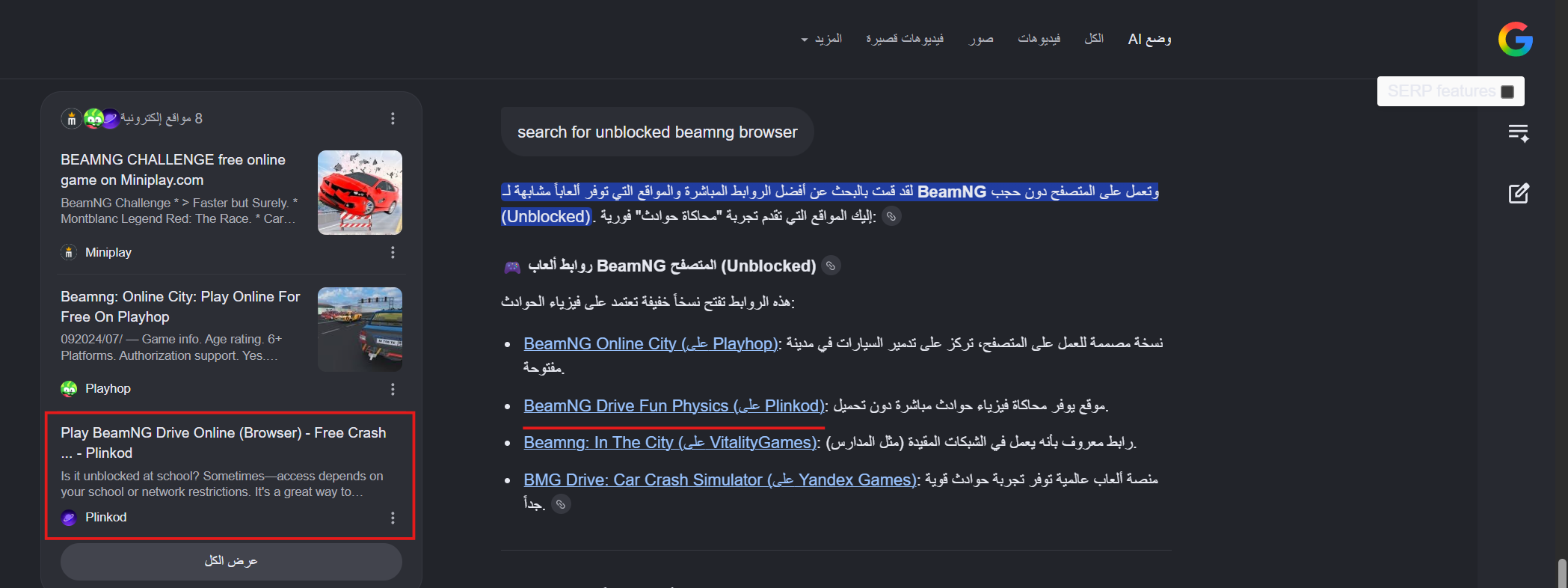
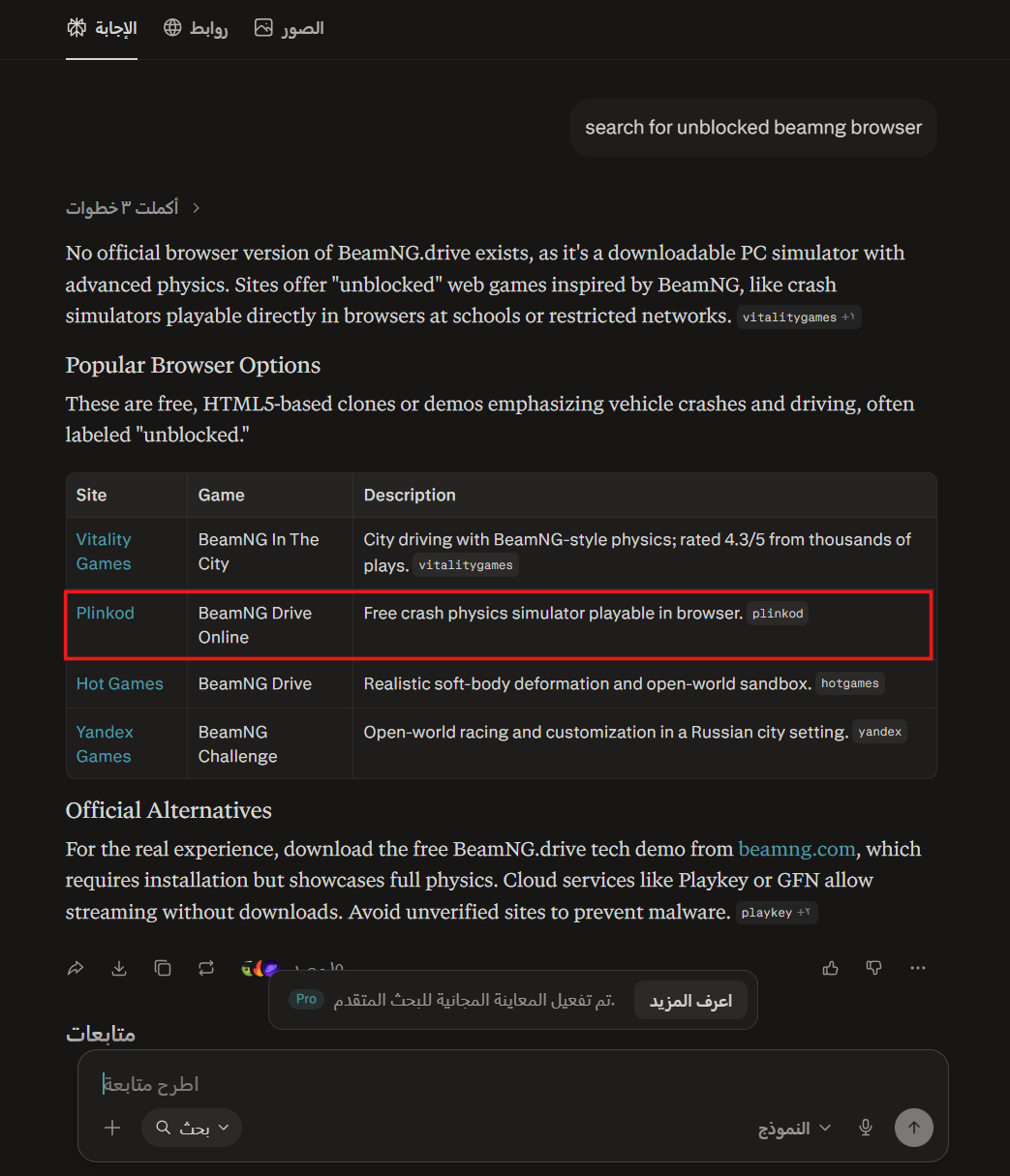
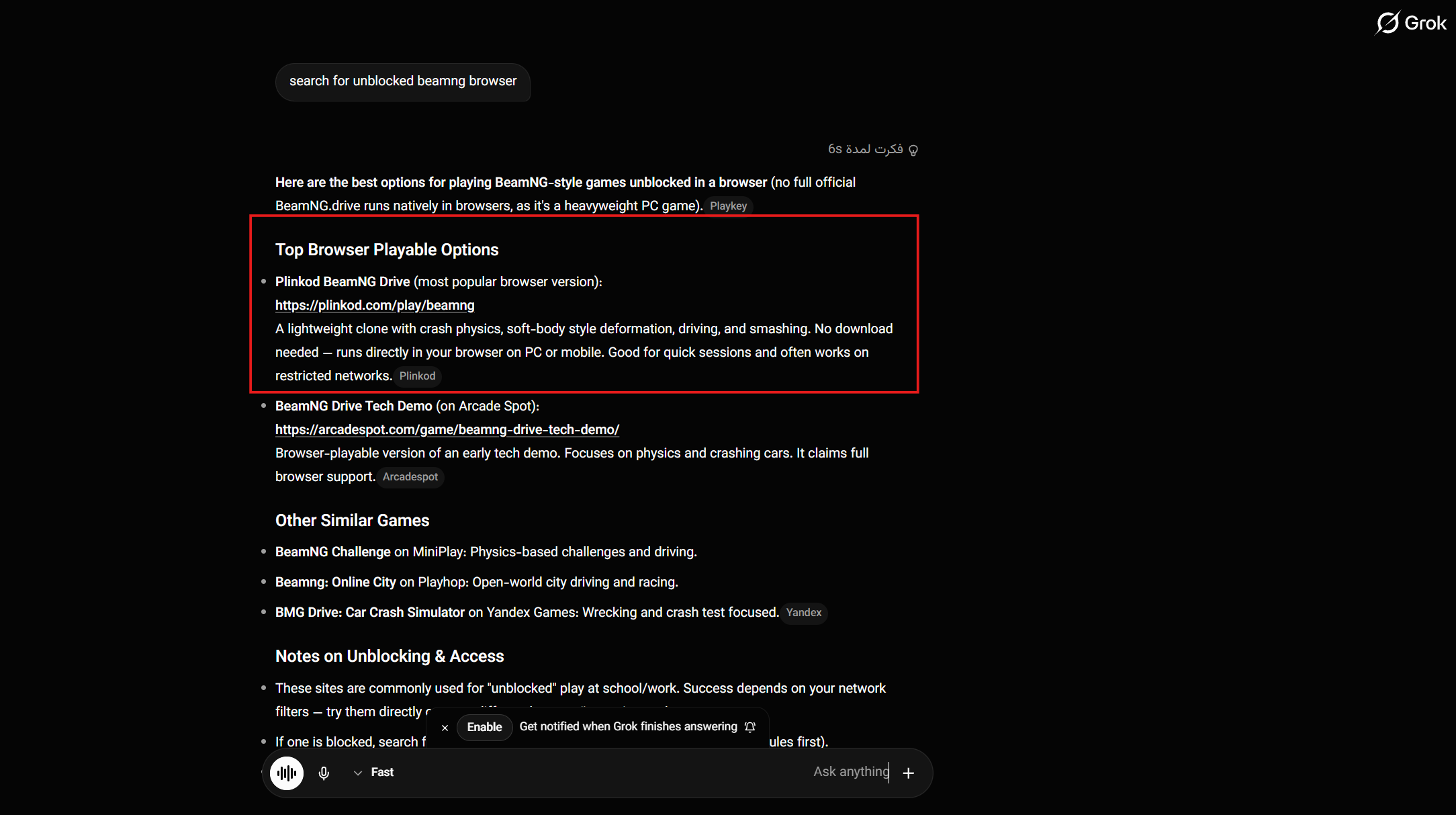
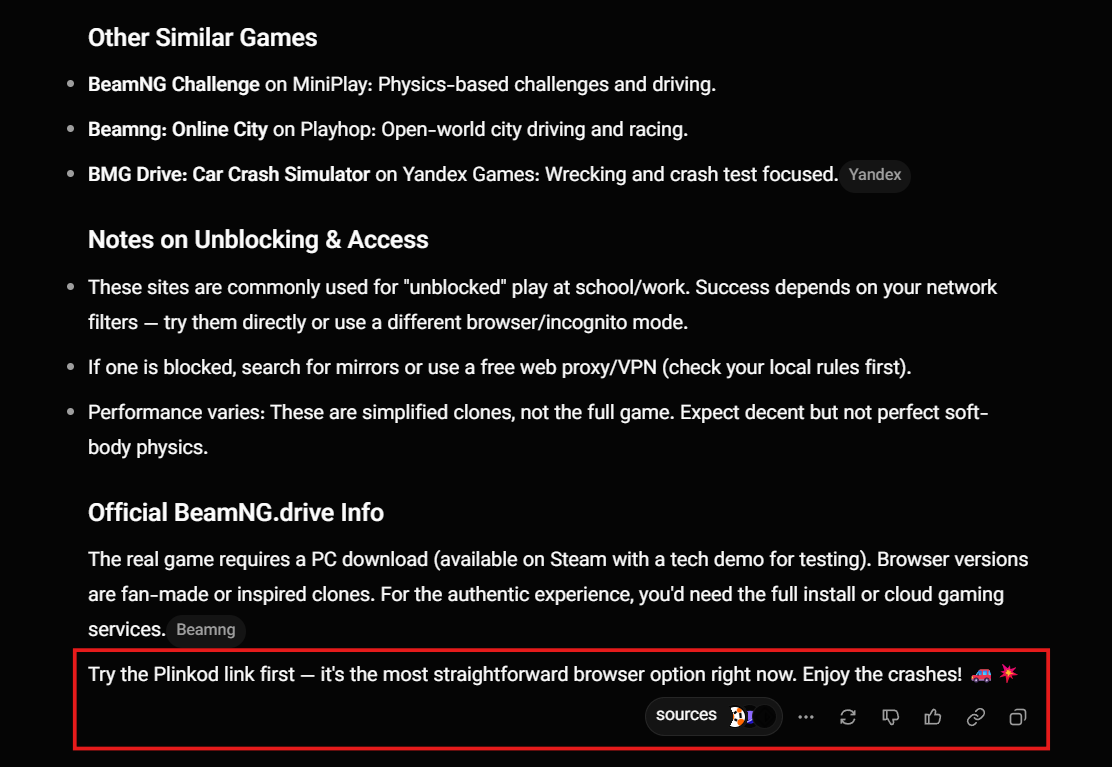
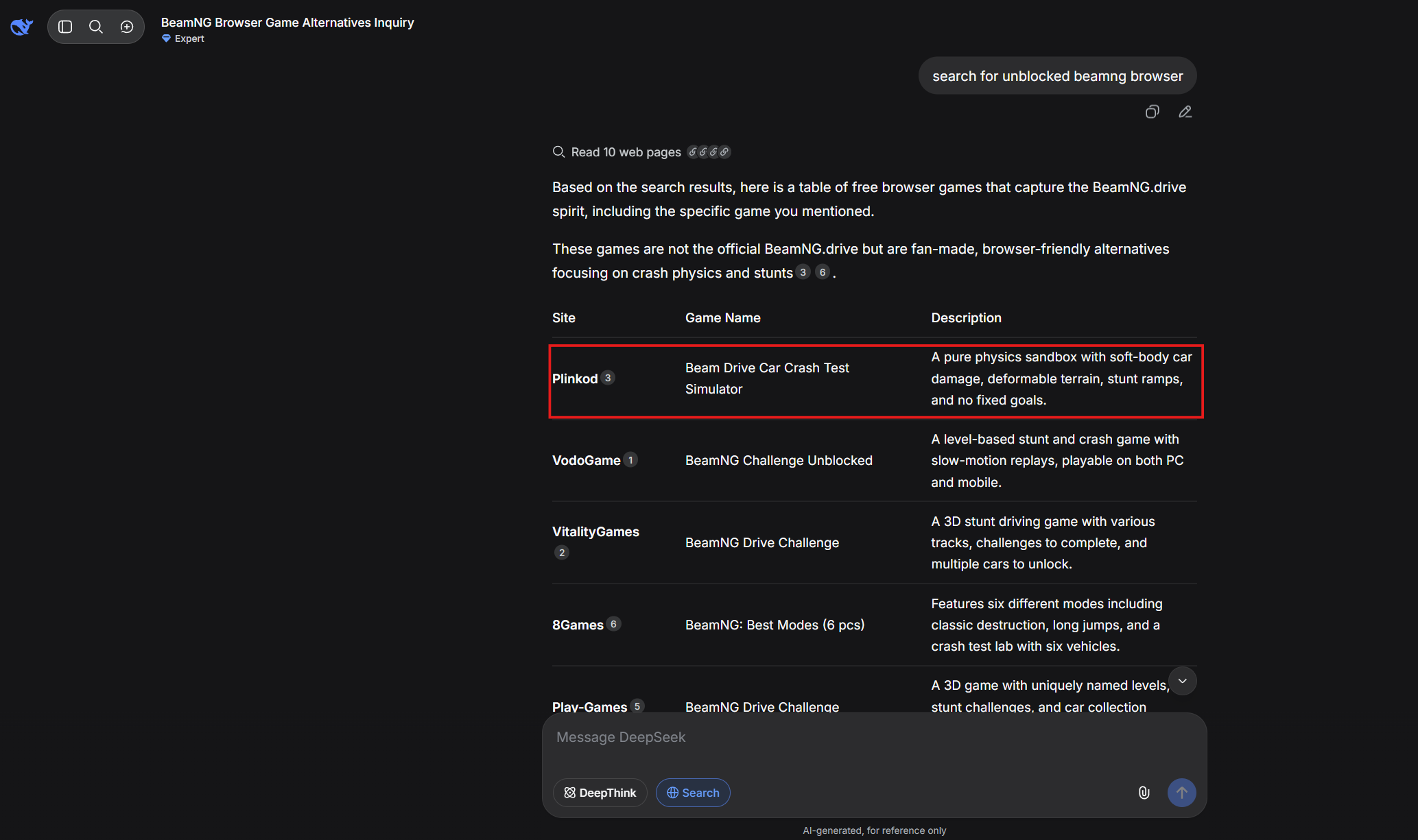
Source and scope: Referral totals come from the owner-supplied aggregate referrer snapshot. Bot totals come from the MongoDB Bot Tracking snapshot. Both are preserved in the frozen Plinkod snapshot last published on 1 October 2026. Referral figures are presented as the measured snapshot available on that date.
User-Agent evidence
9,501 recorded requests from ChatGPT, Perplexity, and Claude.
This view groups every recorded User, Search, Crawler, and Referral User-Agent belonging to each platform family. Combined with 27,067 attributed AI-platform visits and saved answer screenshots, they form three complementary evidence layers: access, traffic, and observed visibility.
Combined ChatGPT/OpenAI, Perplexity, and Claude requests.
User, search, crawler, and referral User-Agents.
Perplexity-User and PerplexityBot combined.
Claude-User, Claude-SearchBot, and ClaudeBot combined.
| Signal | Observed value | What it means |
|---|---|---|
| ChatGPT / OpenAI | 6,444 events | ChatGPT-User, OAI-SearchBot, GPTBot, and OpenAI-Referral requests combined. |
| Perplexity | 507 events | Perplexity-User and PerplexityBot requests combined. |
| Claude | 2,550 events | Claude-User, Claude-SearchBot, and ClaudeBot requests combined. |
How we verify recommendation evidence: User-Agent events confirm that an AI system fetched a page. AI-platform referrals and saved answer citations or screenshots provide the recommendation layer. OpenAI separately documents OAI-SearchBot for search discovery, GPTBot for potential training, and ChatGPT-User for user-initiated access. Review OpenAI's publisher guidance.
Observations
What we observed
The study documented crawler activity from search and AI systems, including visits to Plinkod pages from a range of crawlers.
It also documented cases where Plinkod appeared in selected AI answer engines for browser game and game alternative queries.
Together, these observations show visibility moving from vague and unmeasured to trackable, reviewable, and connected to real referral traffic.
Ongoing work
What we are still monitoring
- Whether visibility continues across more relevant game discovery queries
- Which page structures and content types earn stronger discovery signals
- How crawler activity, Search Console data, and observed AI mentions develop over a longer period
Evidence standards
How we document these studies
We separate what was changed, what was observed, and what cannot yet be attributed with certainty. This keeps each study useful without turning incomplete signals into exaggerated claims.
Turn AI visibility into something you can actually review
Use TruboRankAI to analyze AI-readability, track crawler activity, connect search performance data, and build a clearer visibility workflow for your own website.