





Readiness has dependencies.
A page must be publicly reachable and technically coherent before answer structure, citations, or machine-readable resources can add value.
Inspect public access, source quality, answer structure, evidence, and implementation ownership in one focused workspace.



Turn a verified public finding into one bounded implementation task and retest it after deployment.
Open the Developer Workspace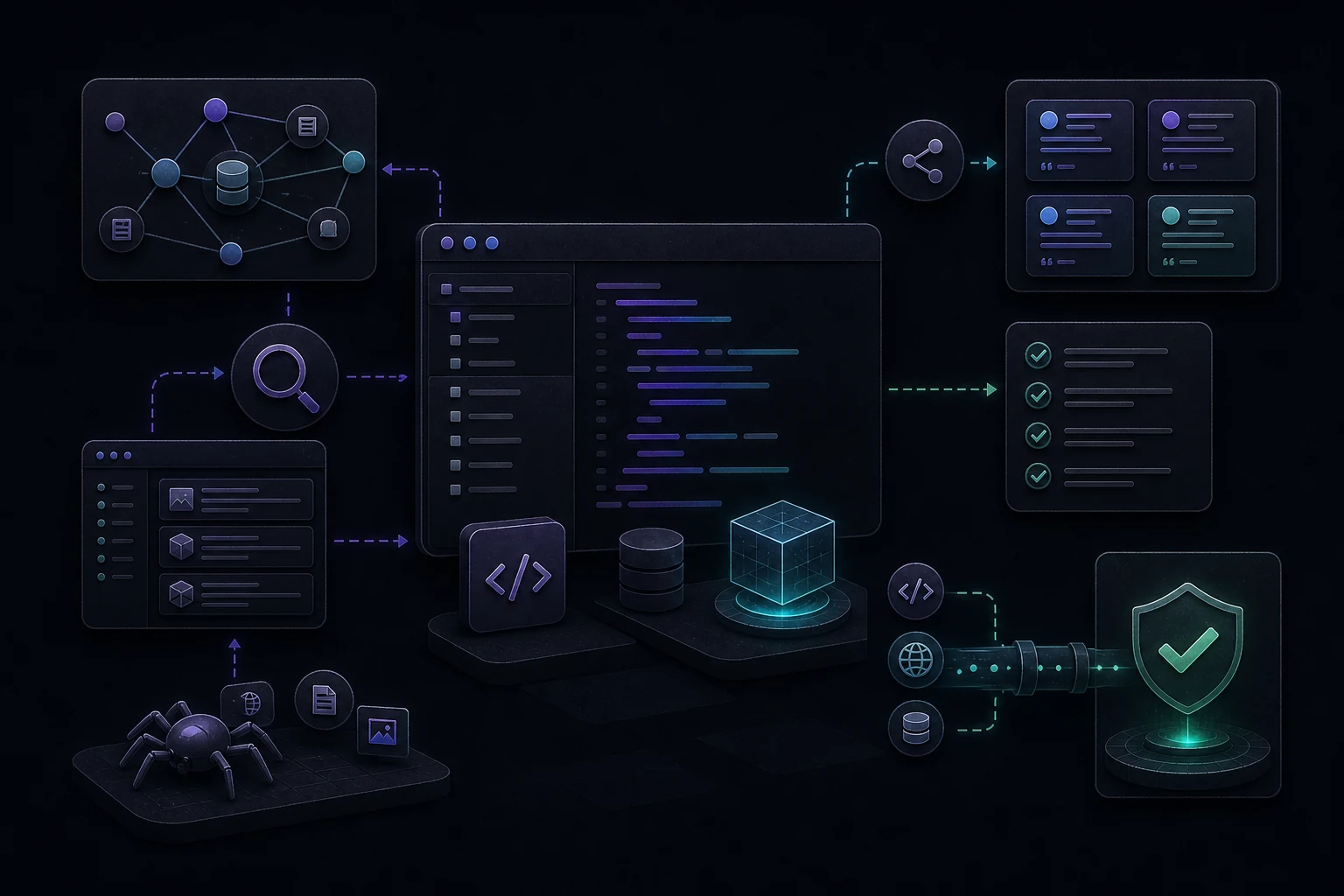
An AI search readiness checker should verify public response and redirects, robots and indexing controls, canonical and sitemap consistency, source and rendered content, clear entities and answers, visible evidence, contextual internal links, accurate structured data, AI crawler policy, and safe public-route boundaries. Passing improves observable readiness but cannot guarantee indexing, an AI citation, referral traffic, or ranking.
TruboRank AI evaluates technical and content readiness signals for AI systems, including discovery files, bot access, Markdown alternatives, and answer-focused page structure.
A page must be publicly reachable and technically coherent before answer structure, citations, or machine-readable resources can add value.
Crawling, indexing, search performance, AI appearances, referrals, and conversions are related observations, not interchangeable proof.
Audit, AI visibility, research, content optimization, and reporting-organized around the website you are improving.
 TruboRankAI
Third-party names and logos are trademarks of their owners and are shown for comparison. Other-tool prices are illustrative monthly benchmarks; exact plans and costs may vary.
Fix the highest dependency, deploy the smallest change, and repeat the exact production test.
Start with the exact canonical production URL. Follow redirects, record the final status and host, and test without an authenticated session. Important public pages should return useful content reliably; account, dashboard, billing, checkout, admin, API, webhook, preview, staging, and user-data routes should remain protected and outside discovery inventories.
Review crawler and indexing controls. Inspect robots.txt by named agent and path, page-level and HTTP robots directives, canonical URLs, sitemap entries, internal links, response headers, and error behavior. A public access rule, Google indexability, and another provider’s crawler policy can differ, so state which system and purpose each result covers.
Compare initial source with the rendered page. Confirm the title, description, H1, primary answer, entity names, important links, evidence, and structured data remain present when scripts fail or data loads slowly. Client-side enhancement can be appropriate, but a public source page should not become an empty shell for crawlers or users.
Evaluate source usefulness rather than keyword density. A ready page answers one clear intent, identifies the relevant product or entity, defines terms, includes original detail, dates changing claims, explains methodology or comparison criteria, links to primary sources, states limitations, and gives a useful next action. Schema must match visible content.
Check topical connections. Priority pages need descriptive internal links from relevant existing content and should link outward to supporting guides, comparisons, policies, documentation, and tools. Avoid isolated modifier pages and keyword-swapped duplicates. When two proposed slugs solve the same task, strengthen one canonical page instead.
Use first-party evidence for later outcomes. Search Console can report Google indexing and search performance, infrastructure logs can record crawler requests, provider reports or controlled observations can record AI appearances or citations, and analytics can record referrals and conversions. These datasets can guide priorities but should not be combined into a guaranteed visibility score.
Map the highest dependency to its owning layer: route, template, CMS entry, metadata generator, sitemap builder, robots output, server, CDN, or WAF. Implement the smallest correction, run syntax and project tests, deploy, repeat the exact production request, and annotate the change before judging longer-term visibility movement.
It means a website is accessible, understandable, and structured in a way that helps AI systems process it.
Yes. SEO focuses on search engines, while AI readiness also considers LLM crawlers, answer extraction, and machine-readable resources.
Yes. The free scanner checks core discoverability signals.