






Read-only first.
Evidence retrieval should be the default. Mutations need narrower tools, stronger authorization, explicit review, and an audit trail.
Give agents structured evidence about public source quality, AI crawler access, mentions, citations, and referrals without collapsing them into one score.




Start with a public scan and one governed finding.
Open the SEO Workspace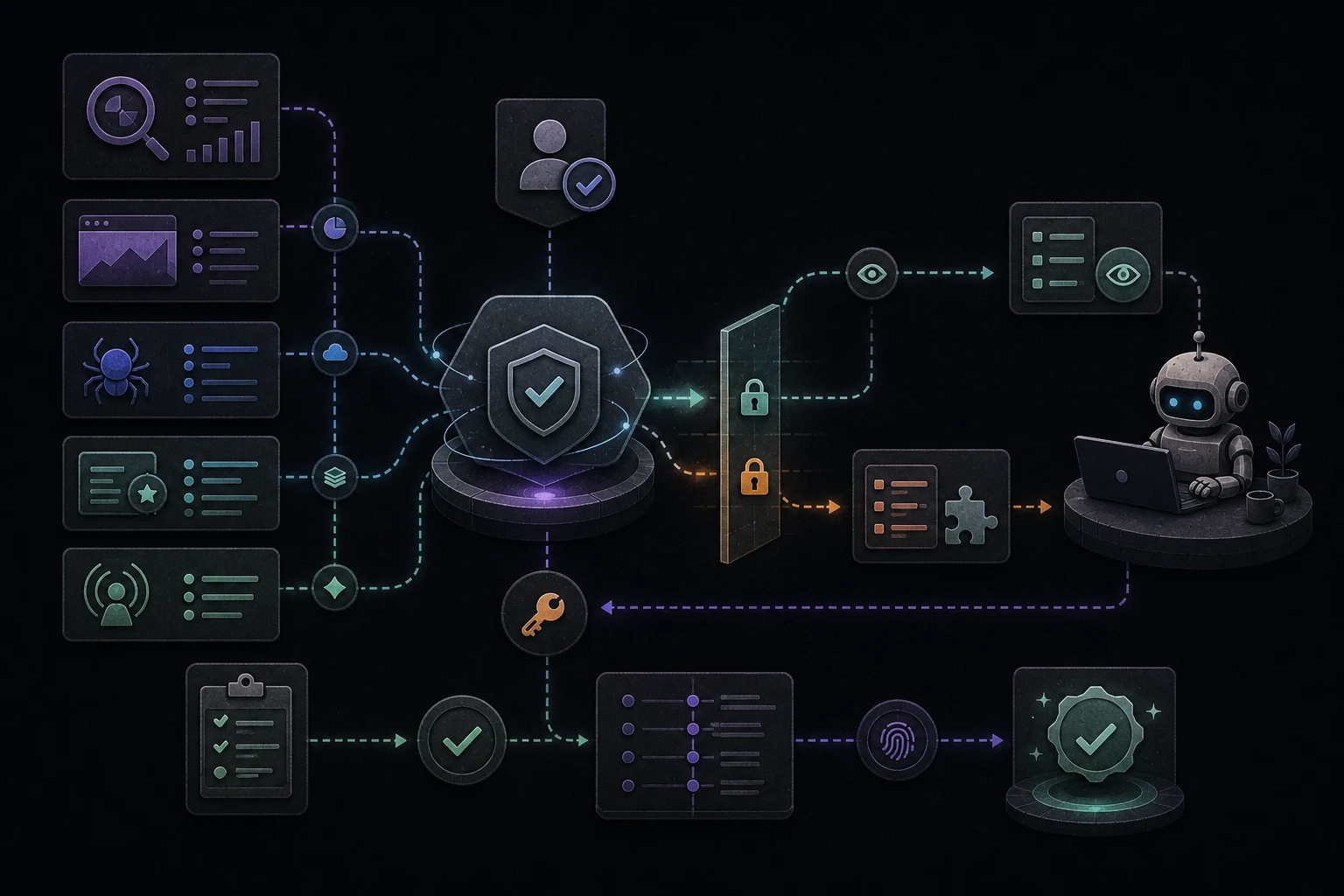
A GEO MCP server should distinguish crawl access, verified bot activity, public-page readiness, sampled mentions, citations, referrals, and conversions. Tools must describe sampling, timestamps, providers, and limitations so an agent does not present modeled visibility as a guaranteed citation.
This action page defines the GEO MCP server boundary: governed evidence, narrow schemas, authorization, human review, audit logs, and production verification. It does not claim that TruboRankAI currently exposes every described remote MCP capability; the existing product provides MCP-ready report prompts while server capabilities are presented as the target workflow.
Evidence retrieval should be the default. Mutations need narrower tools, stronger authorization, explicit review, and an audit trail.
Repository output and local tests are inputs. Verify the deployed anonymous URL before reporting the issue as resolved.
Audit, AI visibility, research, content optimization, and reporting-organized around the website you are improving.
 TruboRankAI
Third-party names and logos are trademarks of their owners and are shown for comparison. Other-tool prices are illustrative monthly benchmarks; exact plans and costs may vary.
Treat protocol connectivity as an access layer, not proof that an agent’s conclusion or edit is correct.
A GEO MCP server should distinguish crawl access, verified bot activity, public-page readiness, sampled mentions, citations, referrals, and conversions. Tools must describe sampling, timestamps, providers, and limitations so an agent does not present modeled visibility as a guaranteed citation.
Model Context Protocol tools are model-controlled, but the specification recommends a human in the loop who can deny invocations. A production server should validate inputs, enforce access controls, rate-limit calls, sanitize outputs, apply timeouts, and log tool usage. Tool names and descriptions must make side effects obvious.
Separate resource ownership from client identity. For protected HTTP servers, use standards-based authorization, validate token audience, prevent token passthrough, store credentials safely, and request the least privilege needed. Local stdio servers need safe environment handling and must not print secrets into model-visible logs.
Design small schemas. Request one site, report, URL, issue, time window, or metric family at a time. Return observed evidence, timestamps, source, limitations, and a verification method. Avoid a single optimize-everything tool that mixes diagnosis, content generation, code changes, deployment, and measurement.
TruboRankAI’s current public promise must stay accurate: reports can produce MCP-ready fix prompts with inline evidence so a coding agent can work without live private dashboard access. Do not describe a conceptual server workflow as an already available remote integration unless the product actually exposes and supports it.
Keep diagnosis, implementation, deployment, and measurement separate. A successful tool call proves only that the tool returned. A passing local test proves only the checked environment. The release still needs an anonymous production request, and later crawling, indexing, ranking, AI mentions, citations, referrals, and conversions remain different outcomes.
Protect private and state-changing surfaces throughout the workflow. Dashboard, account, billing, checkout, API, webhook, analytics, staging, test, secret, and user-data routes must not enter public sitemaps or generated content. Review every proposed mutation, preserve unrelated work, and use the project’s existing architecture and release controls.
Finish with the same evidence that opened the task. Recheck status, redirects, robots directives, canonical, initial and rendered content, sitemap inventory, internal links, schema truth, console, and network behavior. A sitemap can help discovery but does not guarantee that Google will crawl, index, or rank a URL.
It supplies governed generative-engine visibility evidence and workflows to compatible clients.
No. Access, retrieval, mention, citation, referral, and conversion are separate events.
No. MCP is an integration protocol; search performance depends on the public website and external systems.
Reviewed on 2026-08-26 against the Model Context Protocol tool and authorization specifications and Google Search Central guidance. Product statements distinguish TruboRankAI’s current MCP-ready prompt workflow from conceptual future server capabilities.